Human movement is a fundamental part of life. It allows people to eat, sleep, work, play, and socialize. Physiotherapy is the branch of medicine that deals with the study of human movement and its function. Doctors of Physiotherapy specialize in the treatment and management of movement disorders, injuries, and diseases of the musculoskeletal, nervous, circulatory, and respiratory systems.
If you are looking for BPT Direct Admission in Pune Maharashtra, Contact Us at info@topmedicalcolleges.co.in Or +91 9921 499 691
Bachelor of Physiotherapy Courses
- Bachelor of Physiotherapy (BPT)
The BPT programme is designed to give students the knowledge and skills they need to work as physiotherapists. This degree programme combines theoretical and practical elements. Human anatomy, physiology, pathology, biomechanics, pharmacology, clinical evaluation, exercise prescription, rehabilitation procedures, and health promotion are among the topics covered in the programme.
2. Bachelor of Physical Therapy (BPT)
Graduates of this programme are prepared to work independently in a variety of settings such as hospitals, clinics, schools, community agencies, and private offices. Graduates can anticipate a solid foundation in basic sciences as well as clinical practice. They will study how to diagnose and treat musculoskeletal ailments, neurological disorders, cardiovascular diseases, respiratory illnesses, and other typical problems that they will encounter in their future jobs.
3. Bachelor of Rehabilitation Science (BRS)
This curriculum prepares students to work in a range of healthcare settings by providing them with the necessary information and abilities. Physical medicine and rehabilitation, occupational therapy, speech-language pathology, and prosthetics are among the fields in which students will get experience. Graduates will be ready to work in a variety of settings, including acute care institutions, outpatient clinics, home health agencies, and long-term care facilities.
What are the objectives of Physiotherapy?
The objective of physiotherapy is to help people recover from illness or injury through physical rehabilitation.
- Physiotherapy aims to improve the function of the body through exercise and rehabilitation.
- This can be achieved by providing appropriate treatment to the patient.
- This can be achieved by improving muscle tone, flexibility, range of motion, balance, coordination, endurance, and strength. These are some of the many benefits that physiotherapy can provide.
What is the scope of Physiotherapy?
- The Bachelor of Physiotherapy (BPT) is a two-year specialist undergraduate physiotherapy program designed to provide students with a solid foundation in the biological, medical, and scientific foundations of physiotherapy and the clinical application of physiotherapy.
- The BPT curriculum covers all the major physiotherapy disciplines, such as: human physiology, pathophysiology, kinesiology, clinical electrophysiology, and manual therapy.
- In addition to the core curriculum, the BPT program offers a variety of course options, such as: spinal injury management, concussion management, manual therapy, sports physiology, and geriatric management. Upon successful completion of the program, students are eligible to apply for the Certified Physiotherapist (CPT) designation.
Advantages & Benefits Bachelor of Physiotherapy
The Bachelor of Physiotherapy (BPT) program at the University of Waterloo offers students a unique opportunity to learn about the human body from a physiological perspective.
- Students are able to gain knowledge about the structure and function of the human body, including how the body works, what makes it work, and how it can be maintained. This information allows them to develop skills that they can use throughout their careers.
- Physiotherapists have many career opportunities. They can work in hospitals, clinics, schools, sports facilities, rehabilitation centers, and other healthcare settings. They may also work in private practice, public health, government agencies, industry, research, and academia.
Eligibility for Direct Admission in BPT in Pune Maharashtra
Candidates must have a 10+2 diploma from a recognized board or university. They must also have a cumulative grade point average of 60 percent (45 percent for SC/ST) in Physics, Chemistry, Biology, English language, Mathematics, and Computer Science.
Documents required for BPT Direct Admission
- Secondary School Leaving Certificate (SSLC) or equivalent with at least 50% aggregate in aggregate in the relevant subjects.
- Board of Secondary Examination Certificate or equivalent with at least 50% aggregate in aggregate in the relevant subjects.
- Leaving or Transfer Certificate from the qualifying Secondary School or Board of Secondary Examination or equivalent with at least 50% aggregate in aggregate in the relevant subjects.
- Aadhar Card of the candidate
- Passport Photo
- Mark sheet for both 10th and 12th
Selection Process for Direct Admission in BPT in Pune
- The selection process for the Bachelor of Physiotherapy is designed to ensure that only the most suitable applicants are accepted into the program.
- The process is split into four stages: pre-application, application, interview, background check, and final offer.
- The first stage, pre-application, is when applicants are invited to express their interest in the program. Applicants who are invited to move forward will then be invited to submit an application.
Top Colleges for Direct admission in BPT in Pune Maharashtra
Pune offers numerous physiotherapy institutions that provide a variety of programmes such as BPT, MSc Physio Therapy, Diploma in Physiotherapy, and so on. Students can select courses based on their interests and career objectives.
Filling out an application form online, submitting documents, taking an entrance exam, and paying fees are all part of the admissions procedure at physiotherapy colleges in Pune.
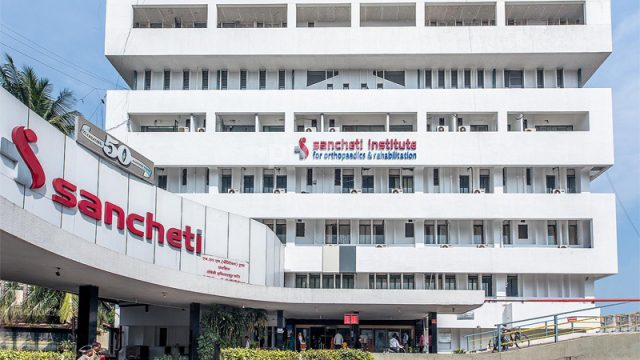
1. Sancheti Healthcare Academy
Dr. Sanjay Sancheti, a prominent Ayurvedic physician who has been practicing Ayurveda since 1982, founded Sancheti Healthcare Academy (SHA) in 2007. He is also the founder of the Pune-based Sancheti Institute of Ayurveda and Naturopathy. Ayurveda, Yoga, Naturopathy, Herbal Medicine, Homeopathy, Nutrition, and other allied health sciences are taught at SHA.
2. Progressive Education Society’s Modern College of Physiotherapy, Pune
Dr. Kasturba Gandhi created the Progressive Education Society (PES) in 1887 with the goal of educating women. PES has evolved into a major school that provides quality education to over 10,000 students from around India.

PES is committed to providing a holistic learning experience to its students through its various programs including the following:
- Bachelor of Science in Physiotherapy (BScPT)
- Master of Physiotherapy (MPhysio)
- Doctorate of Physical Therapy (DPT)
- Diploma in Physiotherapy (DipPT)
3. MAEERs Physiotherapist College, Pune
The MAEERs Physio College was established in the year 2010 at Pune.

- The college is accredited by the National Accreditation and Assessment Council and is connected with the Maharashtra State Board of Physical Education (MSBPE) (NAAC). Diploma programmes in physiotherapy are available at the college.
- NAAC has recognized the institute, and the All India Council for Technical Education (AICTE) in New Delhi has approved it.
- Orthopedics, Neurology, Sports Medicine, Rehabilitation, Cardiology, Dermatology, Ophthalmology, ENT, and other fields of physiotherapy are taught at the institute.
- The hospital is a multi-specialty facility in the Pune suburb of Pimpri Chinchwad.
- Bureau Veritas has received the hospital ISO 9001:2008 certification. The hospital boasts a team of highly qualified doctors that are up to date on medical technologies.
4. Dr. DY Patil College Of Physiotherapy, Pune
The college was founded in 2001 under the auspices of the Maharashtra State Board of Technical Education (MSBTE) and the Maharashtra Government’s Department of Health and Family Welfare. The university with which the college is connected is the University of Mumbai. The college provides a BPT degree programme.
The All India Council of Technical Education (AICTE), New Delhi, has authorized the college, and the National Accreditation Board for Hospitals and Healthcare Providers has accredited it (NABH). The Maharashtra University of Health Sciences, Nashik, is connected with the college. Diploma programmes in physiotherapy are available at the college.
5. Chaitanya Medical Foundation’s College of Physiotherapy, Pune
Chaitanya Medical Foundation’s College of physiotherapy was established in the year 1997.
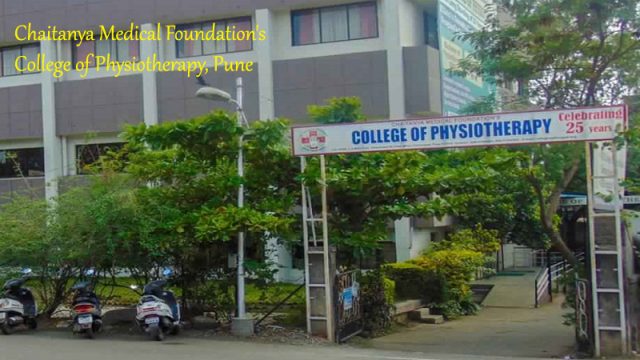
- It is affiliated with the Maharashtra University of Health Sciences (MUHS) and is recognized by the National Board of Accreditation (NBA).
- The college offers various courses like Bachelor of Physiotherapy (BPT), Diploma in Physiotherapy (DPT), and Master of Physiotherapy (MPT).
- The college has been accredited by NBA since 2002.
- The college provides free medical care to patients from poor families.
- The college has been awarded the Best Physiotherapy college in India by NABH.
- The college has been ranked among the top 10 colleges in India by Outlook magazine.
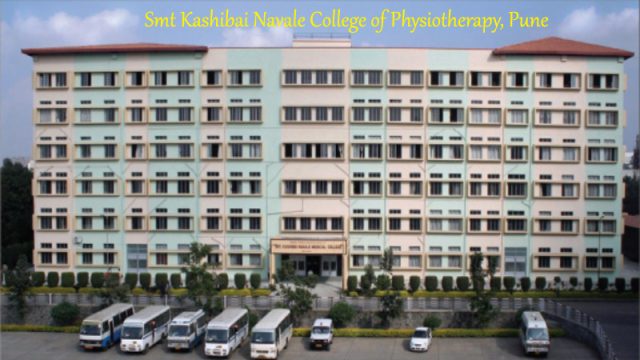
Smt. Kashibai Navale College of Physiotherapy has been established in 2007.
- Admissions are centrally carried out through a Common Entrance Test NEET (National Eligibility & Entrance Test). Admission to the course is on the basis of merit; according to the results of the NEET examination.
- The candidate should have a passing of 12th standard examination of Maharashtra Higher Secondary School Board (H.S.C.) or equivalent with English, Physics, Chemistry, and Biology (Botany & Zoology) subjects.
- Seat Intake for BPT course in Smt. Kashibai Navale College of Physiotherapy is 40.
- The campus has green spaces and mountain ranges surrounding it. The College building has lecture halls, exercise therapy and electrotherapy labs, yoga halls, boys’ and girls’ common rooms, academic departments, a well-equipped library and an administrative block.
Why the BPT course is the second-best option after the MBBS course?
The BPT course is the best option for medical students who want to specialize in general medicine.
- This course will give them a broad understanding of human anatomy and physiology, pathology, pharmacology, microbiology, immunology, biochemistry, genetics, epidemiology, and clinical skills.
- This course educates students to become competent physicians capable of accurately diagnosing and treating patients. They are also capable of doing basic laboratory testing and safely prescribing drugs.
- In addition, the BPT course allows students to learn about other disciplines such as pediatrics, psychiatry, obstetrics and gynecology, dermatology, ophthalmology, ENT, orthopedics, neurology, cardiology, and others.
- Students who complete the BPT programme have the opportunity to become specialty doctors in any sector of their choice.
What are the foundations of the Bachelor of Physiotherapy Course?
The foundations include the following topics:
Anatomy & Physiology
- The two core sciences that constitute the foundation of physiotherapy are anatomy and physiology. They serve as the foundation for understanding how the body functions and how diseases emerge.
- You will learn about the nervous system, muscles, bones, joints, skin, organs, blood vessels, lymphatic system, respiratory system, digestive system, circulatory system, endocrine system, reproductive system, urinary system, excretory system, integumentary system, musculoskeletal system, sensory system, and mental health in this course.
- Students will also learn about disease prevention and management strategies such as nutrition, exercise, and rehabilitation.
Biomechanics
- The science of movement is known as biomechanics. It investigates the forces that act on the body and how these forces affect the body’s ability to move.
- Gravity, inertia, friction, momentum, energy transmission, and other factors are all considered. From the head to the feet, you will examine the biomechanical features of the human body.
Kinesiology
- The scientific study of muscle action is known as kinesiology. It investigates the link between muscle activation and physical performance.
- The importance of muscular contraction in maintaining posture, balance, and mobility is the emphasis of this course. We will investigate the anatomy, physiology, and biomechanics of skeletal muscles, as well as their functions and involvement in motor control.
Job Opportunities after BPT
- If you complete the Bachelor of Physiotherapy (BPT) programme, you will be well-positioned to work as a physiotherapist.
- As a physiotherapist, you’ll help patients recover from ailments and illnesses like arthritis, back pain, and cerebral palsy. You’ll also work with individuals to help them avoid diseases like high blood pressure and diabetes.
- You’ll utilize your skills and knowledge to treat patients in hospitals as well as at their homes.
